The Long Table Doesn't Care About Your Decanter
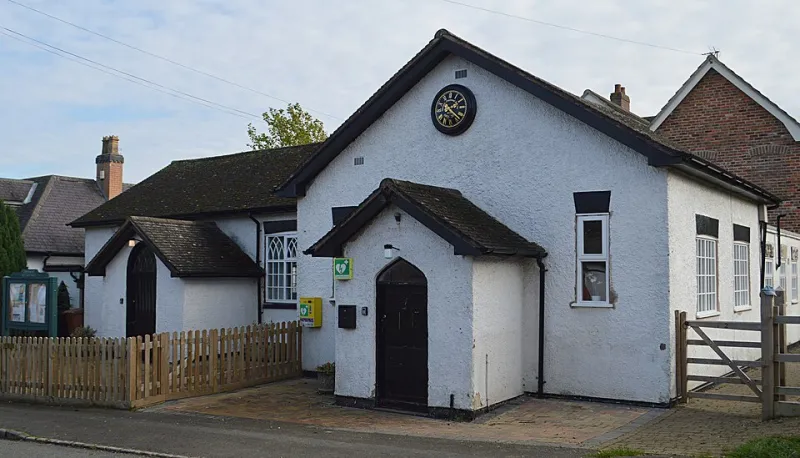
Photo: Russ Hamer, CC BY-SA 4.0, via Wikimedia Commons
There is a particular kind of British evening that begins with a trestle table and ends with a stack of folding chairs. The village hall supper, the church-hall bring-and-share, the school-canteen fundraiser: whatever the venue, the brief is the same. Feed a lot of people, raise a little money, and make sure nobody goes home hungry. Wine is usually an afterthought. This article is an argument for making it a slightly better afterthought.
Zinfandel is unusually well suited to this sort of night. It is bold enough to stand up to a slow-cooker stew, forgiving enough to survive being opened at 6pm and poured at 7.30pm, and generous enough to make a plate of traybake chicken feel like a proper dinner. It is also, crucially, a wine that does not need a ceremony. You do not need to decant it. You do not need to discuss it. You just need to bring enough of it.
First, admit what kind of evening it is
This is not a wine tasting. There will be no spittoons, no tasting sheets, and no one will be comparing notes on oak regimens. The hall will be loud. The urn will be making that noise. Someone will have brought a guitar. The wine has one job: to make the food taste better and the conversation flow more easily.
That means you should not spend £30 on a bottle. You should spend £10 to £15 on a bottle that tastes like more than £10 to £15. Look for California zinfandel from Lodi or Paso Robles, or a southern Italian primitivo, which is the same grape under a different passport. Old-vine labelling is a useful hint, though not a guarantee. What you want is ripeness without sweetness, a bit of pepper or bramble, and enough acidity to cut through a cheese-topped traybake. Avoid anything too delicate. A light, perfumed red will vanish under a ladle of chilli.
Bottles that can take a knock
The village-hall environment is not kind to wine. Bottles arrive cold from the car, sit near a radiator, get moved four times, and are opened with a corkscrew borrowed from the kitchen drawer. You want robust packaging and a robust liquid.
A few practical buying notes. Magnums are your friend if you can find them, not because they are impressive but because they are cheaper per glass and slower to empty. Bag-in-box zinfandel has improved enormously and is genuinely useful for a crowd, though it does not have the same romance. If you are bringing a case, mix in a couple of softer, lower-alcohol reds for people who find zinfandel too much. And bring a spare bottle. Someone always arrives late, and someone always forgets.
Do not worry about vintage too much at this price. Zinfandel is generally a generous grape, and the difference between a good year and a very good year matters less when the wine is being drunk from a tumbler next to a plate of sausage rolls. What matters is freshness. Buy from a shop that turns its stock, not a dusty shelf in the back of a garage.
The bring-and-share arithmetic
Here is the bit most hosts get wrong. For a supper where wine is one of several drinks, plan on one 75cl bottle for every four adults. That gives each person a decent glass and a bit, with room for the people who only drink water. If wine is the main drink, move to one bottle for every three adults, and bring a spare for the raffle table.
A bottle gives you six small glasses or four generous ones. At a long-table supper, people tend to pour once, eat, then pour again. They are not drinking as fast as they would at a bar, because they are busy balancing a plate on their knee. So do not overbuy. But do not underbuy either. Running out of wine at a village hall supper is a specific kind of social failure that is hard to recover from.
If you are organising rather than just attending, ask people to bring a bottle as part of their contribution. Specify red, specify bold, specify under £15. You will get a reasonable spread. Put the bottles on a side table with a corkscrew, a bin, and a tea towel. Do not put them on the food table. People will knock them over reaching for the quiche.
Glasses, temperature, and the trestle-table reality
The good news is that zinfandel does not need fine glassware. It needs a decent-sized bowl and a clean rim. Stemless glasses are ideal for halls because they are harder to knock over and easier to wash up in a single sink. If the hall provides tumblers, use them. If you are buying for the event, cheap stemless glasses from a catering supplier will do more for the wine than an expensive bottle opened badly.
Temperature is the other easy win. Halls are often cold, which is fine for a red that has come in from the car. But do not park bottles next to a radiator or on a sunny windowsill. Zinfandel at 18°C is lovely. Zinfandel at 24°C tastes hot and flabby. If the hall is warm, keep bottles on the floor near the door. If it is cold, bring them into the room an hour before pouring. No decanting. Just open them and let them breathe while the queue forms.
Food that forgives, food that does not
Zinfandel is a natural match for the food that tends to turn up at these events. Slow-cooker chilli, beef stew, bean casserole, traybake chicken with peppers, cottage pie, macaroni cheese, jacket potatoes with a mountain of toppings. It handles tomato, smoke, spice and melted cheese with good humour. It also works with the pudding table, especially anything involving dark chocolate, ginger or dried fruit.
The food it struggles with is the food that struggles at a buffet anyway: delicate fish, heavily vinegar-dressed salads, and anything so chilli-hot that the wine becomes a fire extinguisher. If you are bringing a dish, bring something with a bit of richness and a bit of acidity. A tomato-and-pepper bake will do more for the wine than a plate of plain crudités.
The last half-hour
As the evening winds down, the remaining bottles will be warm, half-empty and sitting among the dirty plates. This is fine. Pour the last of the zinfandel into a jug, put it in the middle of the table, and let people help themselves. The raffle will be starting. Someone will be stacking chairs. The wine has done its job. It has made a long table feel like a good table.
That is the whole point. You do not need a decanter, a sommelier or a tasting note. You need a bold red, enough glasses, and a bit of arithmetic. The village hall will supply the rest.